


If you're planning to study abroad and you want to work while you're at it, the country you choose will shape almost everything, from how many hours you're allowed to work, to whether you even need a separate permit, to how much you'll earn per hour. And with 264 million students now studying outside their home countries, the competition for the right destination is real.
The problem is that most "best countries" lists rank destinations based on university reputation or lifestyle, and they rarely dig into the things that matter when you're working through school on a student budget: Can I actually work without a separate permit? How many hours am I allowed? Will I be safe? Can I afford rent on a part-time salary? What happens after I graduate?
We looked at four criteria that directly affect your ability to work while studying: work rights (hours allowed, permit requirements), safety (based on the 2025 Global Peace Index), visa accessibility (approval rates, processing times), and affordability (tuition fees and cost of living). We also factored in post-study work options, because where you study should set you up for what comes after graduation, too.
A few numbers to set the context: over 5 million international students were enrolled in OECD countries in 2023, and 14 out of 30 European countries now let international students work without a separate work permit, according to a 2025 Euronews analysis. That's a significant shift from just a decade ago, and it means more options for students who need to earn while they learn.
15 best countries to work while studying
15. South Korea
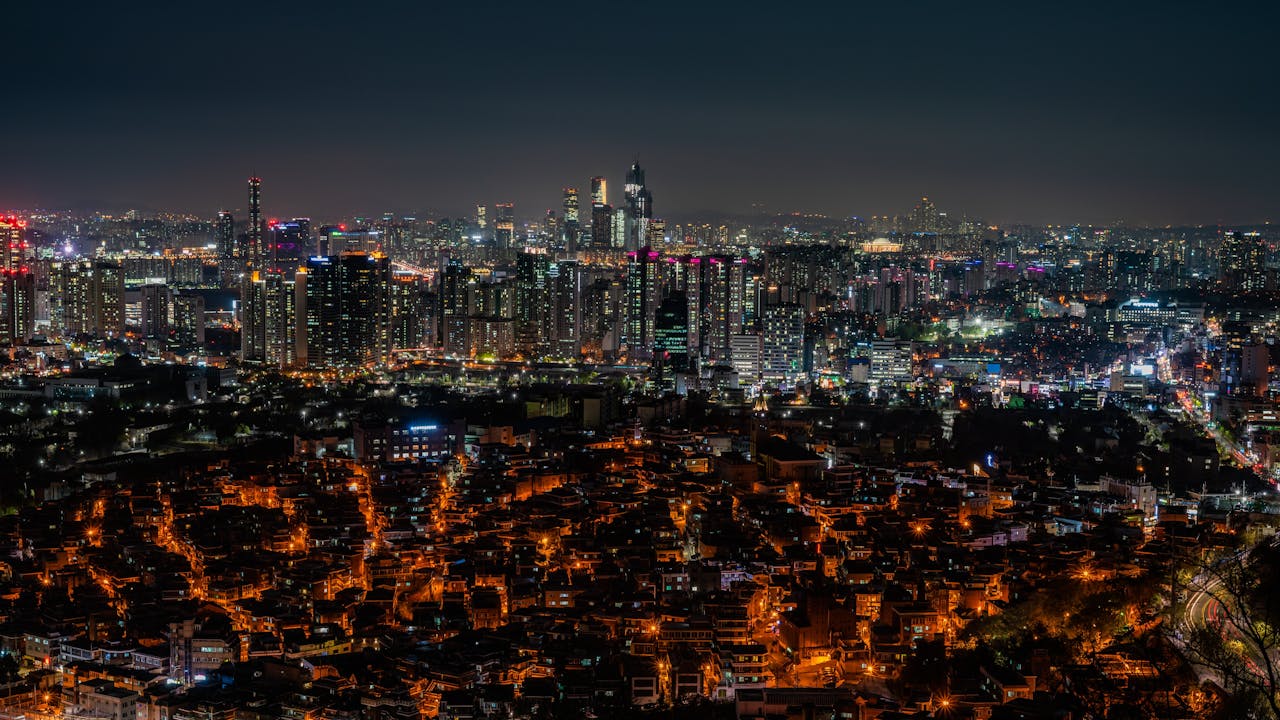
South Korea is investing heavily in becoming a global education hub, and the government has laid out plans to attract 300,000 international students by 2027. Tuition at public universities ranges from $1,600 to $5,000 per semester, making it one of the more affordable options in Asia. Living costs in cities like Seoul average around $800 to $1,000 per month, and smaller cities like Daejeon or Busan can be even lower.
For work rights, international students can work part-time after completing their first semester, and they need approval from the Ministry of Justice. The government expanded work visa categories and extended the job-seeker permit duration in 2025, which signals that restrictions are loosening.
South Korea also ranks well on the Global Peace Index, and its public transport, healthcare, and student infrastructure are consistently rated among the best in Asia. The reason it sits at 15 is the extra step of needing government approval to work, and the language barrier in some part-time roles. But if you're interested in Korea's tech industry or considering learning Korean, the trajectory here is promising.
Seoul is also ranked number #1 as the best city for international students according to QS Best Student Cities 2026.
Find your program in South Korea
14. France
France charges international students just 170 to 243 euros per year in tuition at public universities, which is one of the lowest rates in the world, and that applies regardless of nationality. The country hosts over 443,500 international students, and with a student visa, you can work up to 20 hours per week during term time without needing a separate permit, and up to 964 hours per year total. The minimum wage sits at around 11.65 euros per hour.
France ranks 74th on the Global Peace Index globally, which is moderate, but major student cities like Lyon, Toulouse, and Strasbourg have low crime rates and well-developed student support systems. Student visa approval rates are above 85% with complete documentation.
The cost of living outside Paris is manageable, with monthly expenses around 800 to 1,000 euros in cities like Montpellier or Bordeaux. France is lower on this list because living costs in Paris are high (expect 1,200+ euros per month), and some part-time roles favor French speakers. But the near-free tuition alone makes it worth serious consideration.
13. Australia
Australia's minimum wage for international students is AU$24.80 per hour, which is one of the highest in the world for student workers. That means even at the capped 48 hours per fortnight (about 24 hours per week on average) during term, you can earn a meaningful income. During scheduled academic breaks, there's no hour limit. Australia also offers the Temporary Graduate Visa (Subclass 485), which lets you stay and work for 2 to 4 years after graduation depending on your qualification level.
Read more: Study in Australia: Ultimate Guide for International Students
The trade-off is cost. Annual tuition for international students typically ranges from AU$20,000 to AU$45,000, and living expenses run around AU$1,500 to AU$2,500 per month in cities like Sydney and Melbourne. That's why Australia ranks 13th here, the earning potential is high, but the upfront costs are also high. On safety, Australia ranks in the top 30 of the Global Peace Index. The student visa approval rate sits around 83-90%, and the process is straightforward through the online ImmiAccount system.
Find your program in Australia
12. Canada
Canada has been one of the top destinations for international students for years, hosting over 700,000 students. The Post-Graduation Work Permit (PGWP) is still one of the best post-study pathways in the world, offering up to 3 years of open work authorization that can lead directly to permanent residency. During studies, international students can work 20 hours per week off-campus during regular sessions and full-time during scheduled breaks.
The minimum wage varies by province, ranging from CAD $15.75 to $19.00 per hour, and most student workers can expect around CAD $17.20 on average.
The reason Canada doesn't rank higher is affordability. Tuition for international students has been climbing, now averaging CAD $38,000 per year at the undergraduate level, and cities like Vancouver and Toronto have some of the highest living costs in North America. The government has also been tightening visa policies and enrollment caps for international students in 2024-2026.
It's still a strong destination with real career pathways, but the cost of entry has increased significantly.
11. Netherlands
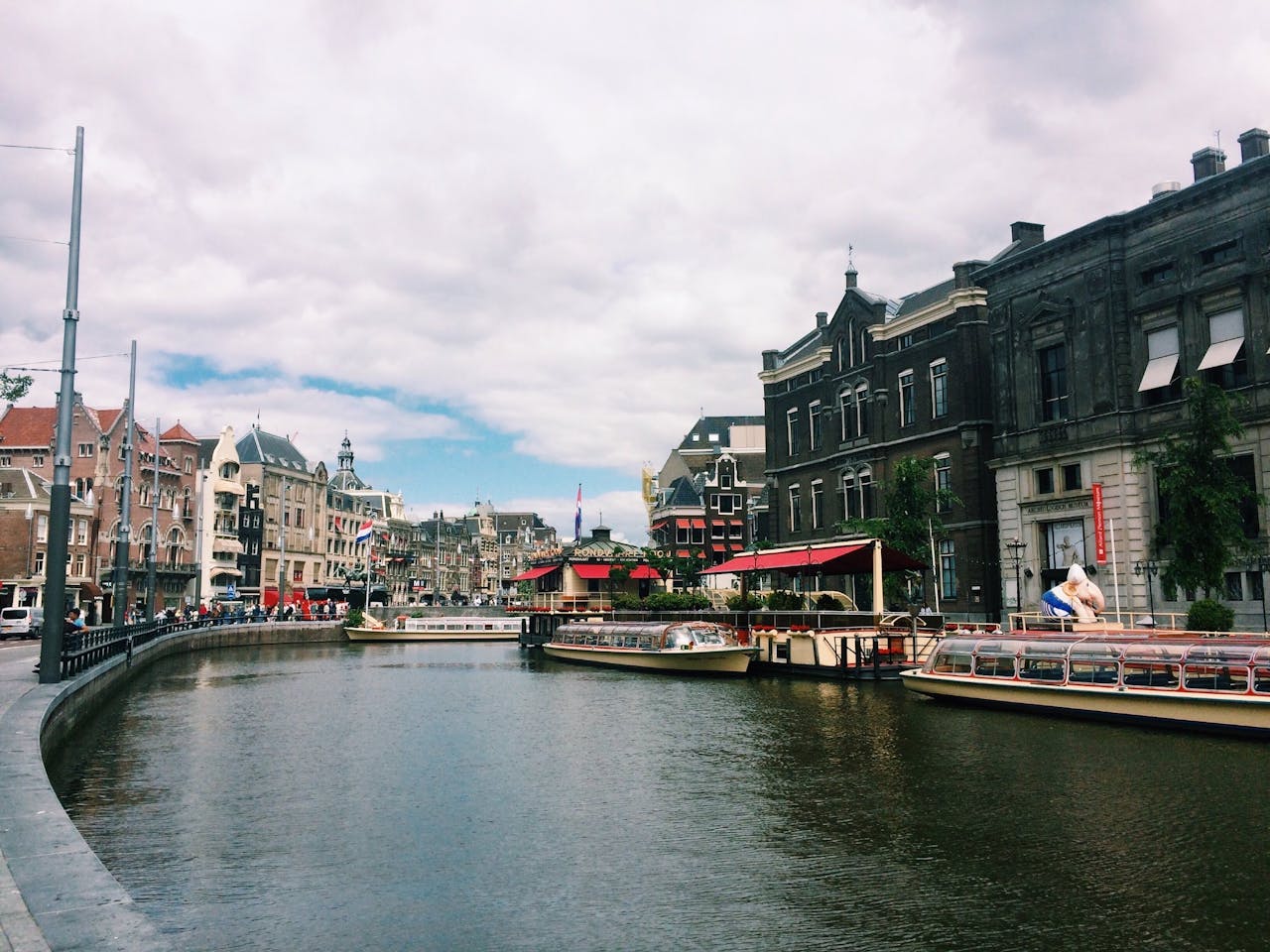
Amsterdam, Netherland
The Netherlands allows international students to work up to 16 hours per week during the academic term, or full-time during June, July, and August. Your employer will need a work permit (TWV), but many universities have career offices that help match students with employers already set up for this. The minimum wage is around 14.06 euros per hour, which is among the highest in Europe, so even with fewer hours, the earning potential is solid.
Tuition for non-EU students ranges from 8,000 to 20,000 euros per year depending on the program, and monthly living costs average around 1,000 to 1,300 euros. The Netherlands ranks in the top 20 on the Global Peace Index, and Dutch universities consistently appear in global top-100 lists. After graduation, international graduates can apply for an Orientation Year visa, which gives you 12 months to find a job and transition to a work permit. The 16-hour weekly cap is the main limitation, but if you're prioritizing high wages per hour and strong post-study options in a safe country, it's a competitive choice.
Find your program in Netherlands
10. Sweden
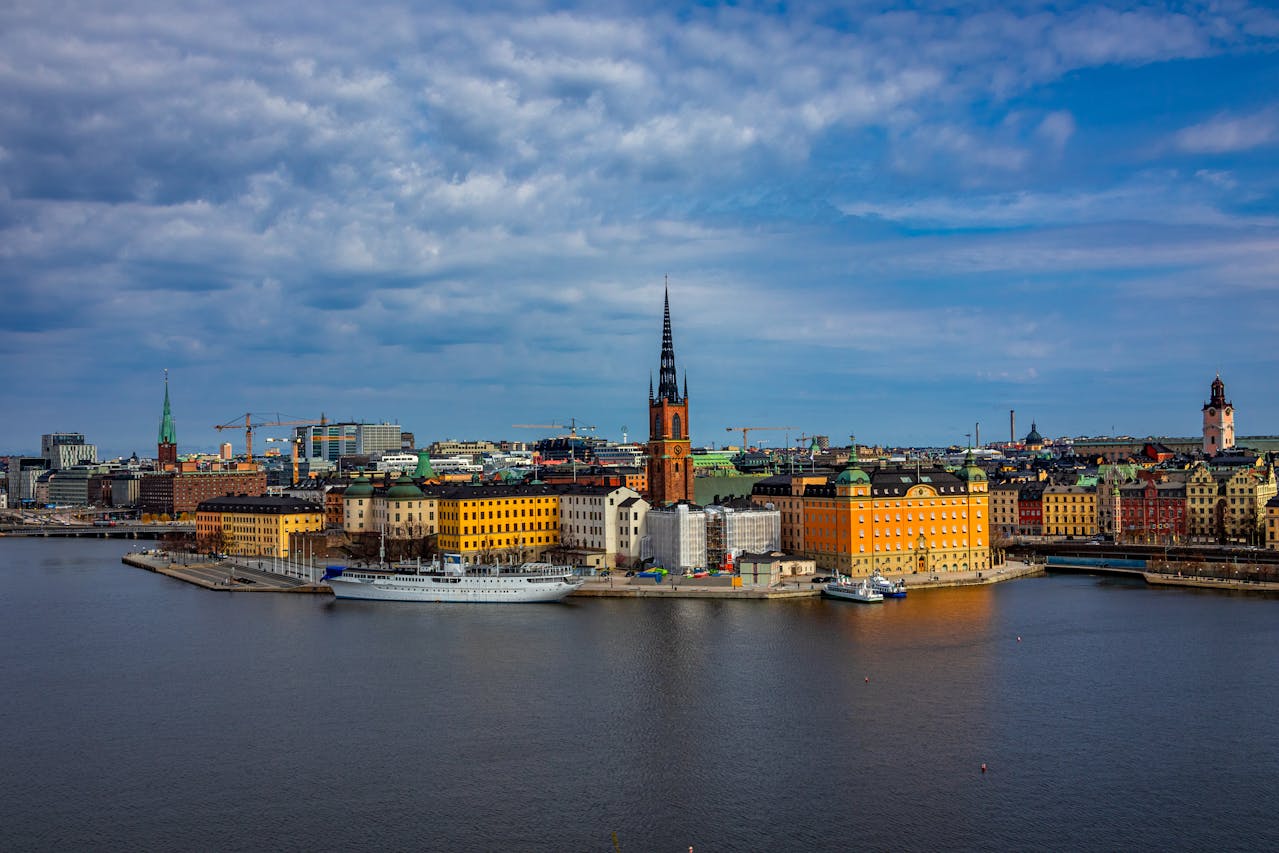
Stockholm, Sweden
Sweden is one of the few countries in Europe that places no limit on how many hours international students can work during their studies. As long as you hold a valid student residence permit, you can work as much as your schedule allows, and you don't need a separate work permit. That's a significant advantage over countries that cap hours at 16 or 20 per week.
Read more: Study in Sweden as an International Student 2026 Guide
Non-EU students pay between 80,000 and 295,000 SEK per year (roughly 7,000 to 26,000 euros), and monthly living costs average around 8,000 to 12,000 SEK (700 to 1,100 euros). There's no official national minimum wage in Sweden, but collective bargaining agreements typically set wages around 130-150 SEK per hour (12-14 euros) for entry-level roles.
Sweden ranks 15th on the Global Peace Index, and cities like Stockholm, Gothenburg, and Malmo are well-known for their quality of life and student infrastructure.
After graduation, you can apply for a 12-month residence permit to look for work or start a business.
9. Austria
Austria ranks 4th on the 2025 Global Peace Index, making it one of the safest countries in the world for international students. International students on a student visa can work up to 20 hours per week, and the minimum wage is approximately 12.41 euros per hour. Tuition at public universities is relatively low, around 726 to 1,500 euros per semester for non-EU students, which is significantly cheaper than most Western European alternatives.
Monthly living costs in Vienna average around 950 to 1,200 euros, and smaller cities like Graz and Linz are even more affordable. Austria's student visa has a high approval rate when documentation is complete, and after graduation, non-EU graduates can apply for a 12-month Red-White-Red Card to search for qualified employment. The country's central location in Europe also gives you access to Germany, Switzerland, and Italy for networking and career opportunities. Austria is at 9 because the 20-hour cap and slightly more paperwork-heavy visa process keep it behind countries with fewer restrictions.
8. Malaysia
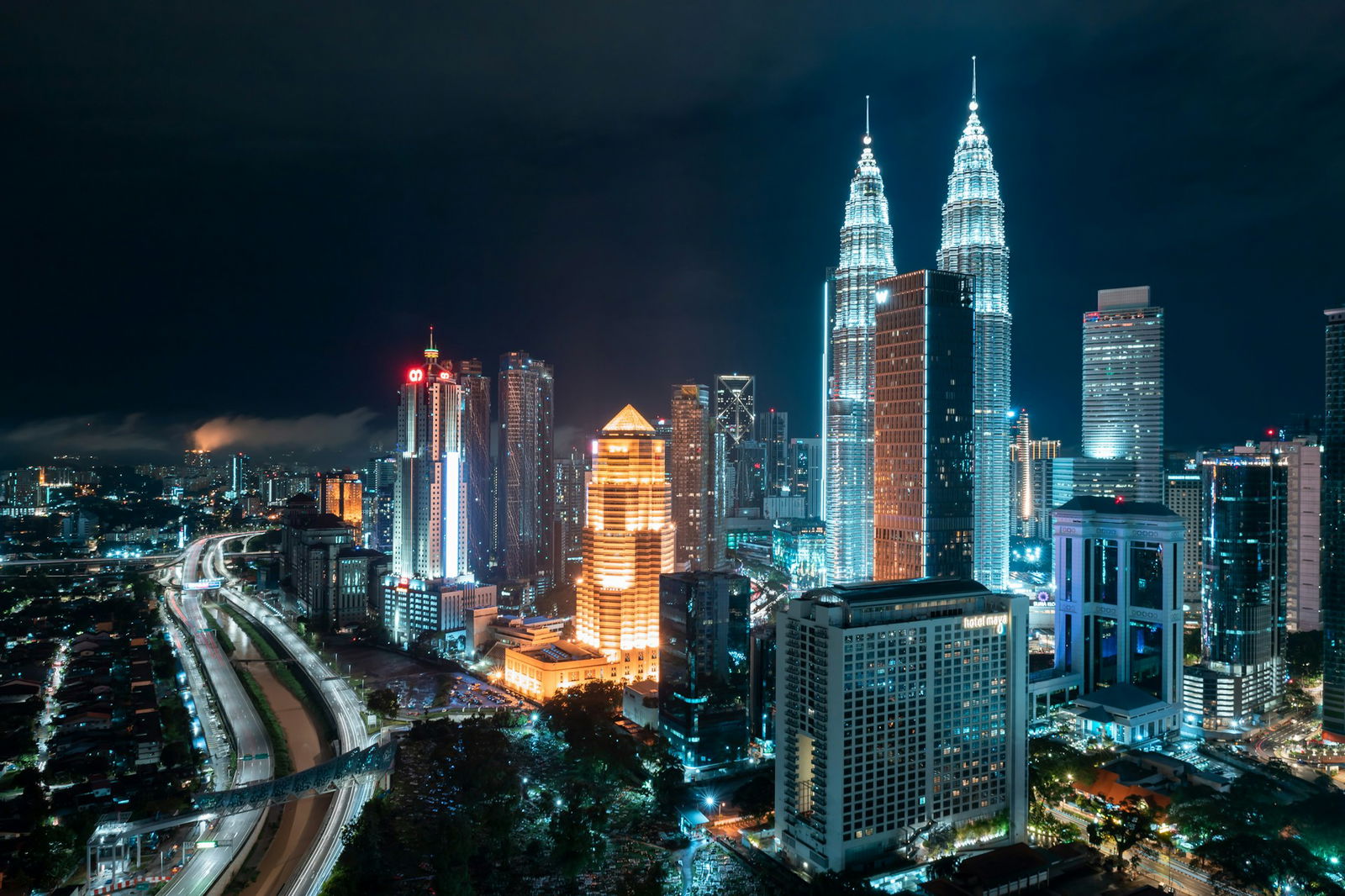
Kuala Lumpur at night
Malaysia has a student visa approval rate of around 95%, one of the highest in the world, and the process has been simplified to the point where the Immigration Department pre-approves the Visa Approval Letter (VAL), so the embassy step is essentially a formality.
Tuition at public universities ranges from $1,000 to $4,000 per year, and private universities offering degrees in partnership with UK and Australian institutions charge $3,000 to $8,000 per year. The cost of living is among the lowest on this list, averaging $330 to $660 per month.
Read more: How to Apply to Universities in Malaysia as an International Student
International students can work up to 20 hours per week during term time, and full-time during semester breaks. In 2024, Malaysia also introduced the Graduate Pass, which lets international graduates stay and work for 12 months without needing employer sponsorship.
Read more: Why Malaysia is One of the Best Places to Study Business in Asia?
Malaysia ranks well in regional safety assessments, and major student cities like Kuala Lumpur and Penang have modern infrastructure and large international communities. The lower ranking reflects that hourly wages are modest (around $2 to $4 per hour for part-time work), so while your living costs are low, earning potential is also lower compared to European or Australasian options.
7. Finland
Finland allows international students to work unlimited hours as long as the work is related to their studies, and there's no cap during academic breaks regardless. You don't need a separate work permit. Finland's student visa approval rate is between 90-95%, and 82% of decisions are made within 30 days, making it one of the fastest processing times in Europe.
For EU/EEA students, tuition at public universities is free. Non-EU students pay between 6,000 and 18,000 euros per year depending on the program and university. Monthly living costs average around 700 to 1,100 euros. Finland ranks among the top 15 on the Global Peace Index and consistently tops global rankings for quality of life, education, and safety. There's no official minimum wage, but collective agreements set typical entry-level wages at 8 to 12 euros per hour depending on the sector. After graduation, you can extend your residence permit for up to two years to search for employment. Finland is at 7 because non-EU tuition fees have increased in recent years, and the job market can favor Finnish or Swedish speakers for many part-time roles.
6. Ireland
Ireland ranks 2nd on the 2025 Global Peace Index, making it one of the safest countries on Earth. International students on a Stamp 2 visa can work up to 20 hours per week during the academic year and full-time (40 hours per week) during designated holiday periods from June to September and December 15 to January 15. No separate work permit is needed.
The national minimum wage is €14.15 EUR per hour (for age 20 and above), and student visa approval rates sit at 95-97% for applicants with complete documentation.
Read more: Study in Ireland! 2026 Complete Application Guide
Tuition for non-EU undergraduates ranges from 7,000 to 17,000 euros per year depending on the institution and program. Monthly living costs outside Dublin average around 800 to 1,100 euros, though Dublin itself can push closer to 1,500 euros.
After graduation, the Third Level Graduate Scheme gives master's and PhD graduates up to 24 months of full-time work authorization. Ireland's tech sector (Google, Meta, Apple, and Salesforce all have European headquarters in Dublin) also creates real opportunities for students in STEM and business fields. The cost of living in Dublin is the main drawback, but the combination of safety, work rights, and career access is hard to match.
5. Portugal
Portugal is the only major student destination that combines top-10 Global Peace Index safety (ranked 7th in 2025) with genuinely affordable living costs in Western Europe. International students with a valid residence permit can work without needing a separate work permit, and there's no cap on hours as long as academic commitments are met, though most students work around 20 hours per week in practice.
Tuition at public universities ranges from 1,000 to 7,000 euros per year for non-EU students, and monthly living costs in cities like Porto, Braga, and Coimbra average 600 to 900 euros. Lisbon is more expensive, around 900 to 1,200 euros per month. The minimum wage is around 10.64 euros per hour.
After graduation, Portugal offers a residence permit extension for job searching, and the country has been growing its tech sector rapidly, with Lisbon now hosting major tech events like Web Summit.
Portugal is at 5 because while wages are lower than Northern European countries, the cost-to-quality ratio is one of the best you'll find anywhere in Europe.
4. Poland
Poland is one of the most affordable study destinations in Europe, with tuition at public universities ranging from 2,000 to 5,000 euros per year for international students, and monthly living costs between 500 and 700 euros in cities like Warsaw, Krakow, and Wroclaw. That's roughly 60% less than studying in France or Germany when you factor in all expenses, according to a Euronews comparison.
International students can work up to 20 hours per week during term time without a separate work permit, and full-time during breaks. Student visa processing is fast, often within 10 to 14 days, with high approval rates. The minimum wage is around 28.10 PLN per hour (approximately 6.50 euros). Poland ranks well on safety metrics for Central Europe, and its cities are modern, well-connected, and have growing international communities. After graduation, graduates can apply for a temporary residence permit to search for work. Poland is at 4 because the combination of low costs, no separate work permit, fast visa processing, and a growing number of English-taught programs makes it one of the most accessible options on this entire list.
3. Estonia
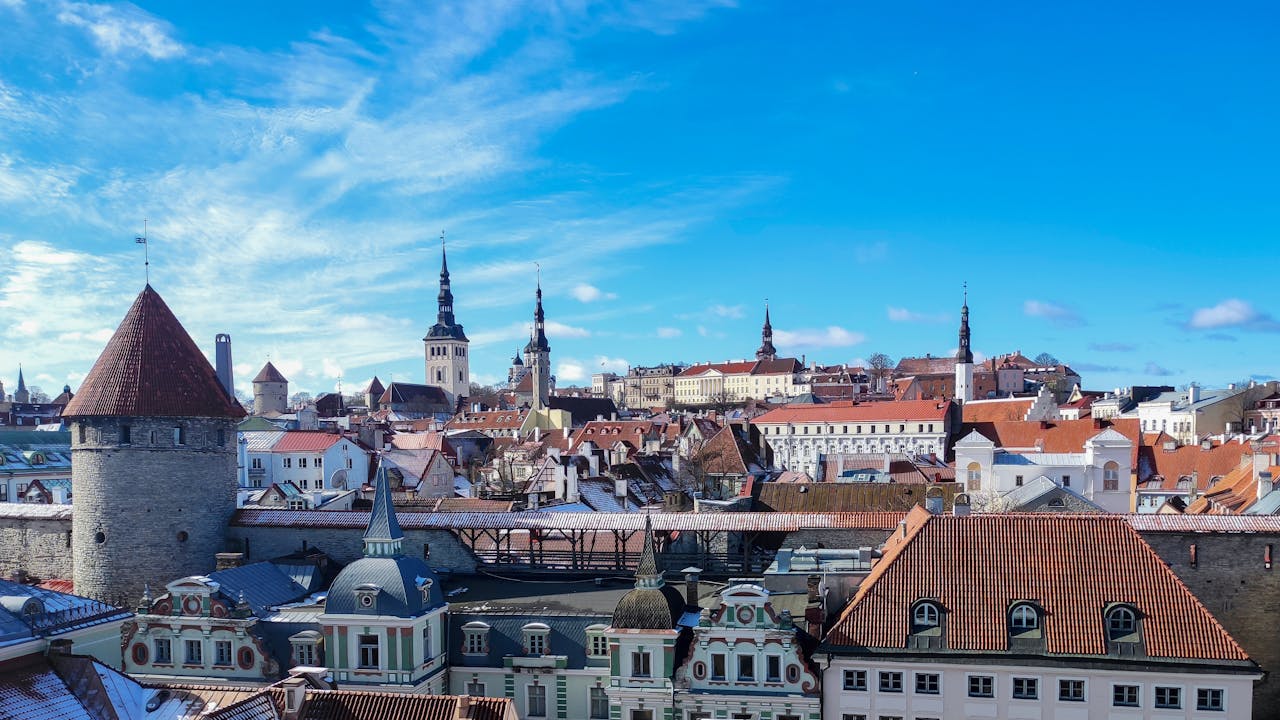
Tallinn, Estonia
Estonia stands out for one reason that no other European country on this list can match: international students can work no limited hours with no restrictions, as long as they maintain their academic standing. There's no weekly cap, no separate work permit, and no requirement that the work be related to your studies.
Tuition ranges from 1,660 to 7,500 euros per year depending on the program, and monthly living costs in Tallinn average 600 to 900 euros. Estonia is one of the most digitally advanced countries in the world (e-Residency, digital ID, and a fully digital government infrastructure), and its startup scene has produced companies like Skype, Wise, and Bolt. After graduation, international students can apply for a 6-month job-search visa. Entry-level wages are around 4 to 7 euros per hour, which reflects the lower cost of living.
Estonia ranks well on safety, with low crime rates and political stability. It's at 3 because the unlimited work hours, low cost of entry, and one of the fastest-growing tech scenes in Europe make it a strong choice for students who want to gain real work experience while studying.
2. New Zealand
New Zealand ranks 3rd on the 2025 Global Peace Index, and in November 2025, the government officially extended international student work rights to 25 hours per week during term time, up from the previous 20-hour cap. During scheduled breaks, students can work full-time. The minimum wage is NZ$23.15 per hour (approximately 12.50 euros), which means a student working 25 hours per week can earn around NZ$578 per week before tax.
Read more: Study in New Zealand 2026: Application Guide for International Undergraduate Students
Tuition for international students ranges from NZ$22,000 to NZ$35,000 per year depending on the program, and monthly living costs average NZ$1,200 to NZ$1,800. After graduation, the Post-Study Work Visa allows graduates to stay and work for up to 3 years. New Zealand's student visa process is transparent and largely online, with straightforward requirements.
The country is known for being welcoming to international students, with strong anti-discrimination protections and a multicultural society. New Zealand is at 2 because the combination of top-tier safety, generous work hours, high wages, and a 3-year post-study visa is among the best overall packages available to international students anywhere in the world. The main consideration is that tuition and living costs are on the higher end.
Find your program in New Zealand
1. Germany
Germany takes the top spot because it checks every box. Public universities charge zero tuition for international students (with the exception of Baden-Wurttemberg, which charges non-EU students 1,500 euros per semester), and the only mandatory cost is a semester fee of 100 to 300 euros that typically includes a public transport pass. Over 402,000 international students were enrolled in German universities in the winter semester of 2024/25, a 6% year-on-year increase.
Read more: Study in Germany: The Ultimate Guide for International Students
International students can work 140 full days or 280 half days per year, which works out to roughly 20 hours per week during term. The minimum wage is 12.82 euros per hour. Germany's student visa approval rate exceeds 90%, and after graduation, you get an 18-month job seeker visa to find employment in your field.
Monthly living costs average 992 to 1,200 euros, and cities like Leipzig, Dresden, and Dortmund are significantly cheaper than Munich or Frankfurt.
Read more: Study in Germany for FREE in English!
Germany ranks within the top 20 on the Global Peace Index, and the country's economy is the largest in Europe, meaning there are real career opportunities across engineering, technology, healthcare, and manufacturing. When you add up free tuition, strong work rights, high safety, reasonable living costs, a 90%+ visa approval rate, and an 18-month post-graduation pathway, no other country on this list matches Germany's overall combination.
Compare All 15 Countries
Use this table to compare the countries side by side. We've included the key data points for each destination so you can weigh your options based on what matters most to you.
| Rank | Country | Work Hours/Week | Work Permit Needed? | Monthly Living Cost | Min. Wage/Hour | Post-Study Work Visa |
|---|---|---|---|---|---|---|
| 1 | Germany | ~20 hrs (140 full days/yr) | No | 992-1,200 EUR | 12.82 EUR | 18 months |
| 2 | New Zealand | 25 hrs | No | NZ$1,200-1,800 | NZ$23.15 | Up to 3 years |
| 3 | Estonia | Unlimited | No | 600-900 EUR | ~4-7 EUR | 6 months |
| 4 | Poland | 20 hrs | No | 500-700 EUR | ~6.50 EUR | Temp. residence permit |
| 5 | Portugal | No formal cap | No | 600-1,200 EUR | 10.64 EUR | Job-search extension |
| 6 | Ireland | 20 hrs (40 on holidays) | No | 800-1,500 EUR | 13.50 EUR | Up to 24 months |
| 7 | Finland | Unlimited (study-related) | No | 700-1,100 EUR | ~8-12 EUR | Up to 2 years |
| 8 | Malaysia | 20 hrs | No (with student pass) | $330-660 USD | ~$2-4 USD | 12 months (Graduate Pass) |
| 9 | Austria | 20 hrs | No | 950-1,200 EUR | 12.41 EUR | 12 months |
| 10 | Sweden | Unlimited | No | 700-1,100 EUR | ~12-14 EUR | 12 months |
| 11 | Netherlands | 16 hrs (full-time summer) | Yes (employer applies) | 1,000-1,300 EUR | 14.06 EUR | 12 months |
| 12 | Canada | 20 hrs | No | CAD $1,200-2,000 | CAD $17.20 | Up to 3 years (PGWP) |
| 13 | Australia | ~24 hrs (48/fortnight) | No | AU$1,500-2,500 | AU$24.80 | 2-4 years |
| 14 | France | 20 hrs | No | 800-1,500 EUR | 11.65 EUR | Temp. residence permit |
| 15 | South Korea | Varies (after 1st semester) | Yes (gov. approval) | $800-1,000 USD | ~$7 USD | Job-seeker permit |
Deciding where to study abroad is one of the biggest choices you'll make, and having the right information upfront makes all the difference.
If you want detailed, country-specific guides covering visa requirements, university options, application processes, and student life, check out the Study Destinations Guide. Each guide is built to give you the clarity you need to compare your options and take the next step.
If you're looking for scholarships available worldwide, you can easily search here:
Frequently Asked Questions
Which country lets international students work the most hours while studying?
Estonia and Sweden stand out because they allow international students to work unlimited hours with no weekly cap, and neither country requires a separate work permit. Finland also allows unlimited hours for work related to your field of study. Most other countries on this list cap work at 20 to 25 hours per week during term time, with full-time work allowed during academic breaks.
Can I cover my living expenses by working part-time as an international student?
It depends heavily on the country. In countries with low living costs and reasonable wages, like Poland (living costs of 500-700 euros/month) or Estonia (600-900 euros/month), working 20 hours per week can cover a significant portion of your expenses. In high-wage countries like Australia (AU$24.80/hour) or New Zealand (NZ$23.15/hour), part-time work can generate meaningful income, but living costs are also higher. In most cases, part-time earnings will supplement your budget rather than fully cover it, so having some savings or financial support is realistic planning.
Do I need a separate work permit, or can I work with my student visa?
In 14 of the 15 countries on this list, you do not need a separate work permit to work part-time as an international student. Your student visa or residence permit already includes work authorization. The exceptions are South Korea (which requires government approval from the Ministry of Justice) and the Netherlands (where your employer needs to apply for a TWV work permit on your behalf). Always check the specific conditions attached to your visa, because some countries require work to be related to your field of study or restrict hours during exam periods.
Which countries offer the best post-study work options after graduation?
Canada and New Zealand lead with post-study work visas of up to 3 years. Australia offers 2 to 4 years depending on your qualification level. Ireland provides up to 24 months for master's and PhD graduates. Germany offers an 18-month job-seeker visa. These post-study pathways are an important factor because they give you time to find skilled employment, gain experience, and in some cases, apply for permanent residency. Countries with shorter post-study options (6-12 months) require you to move faster after graduation.
Is it safe to study abroad as an international student in these countries?
All 15 countries on this list were selected partly based on their safety records. Ireland (2nd), New Zealand (3rd), and Austria (4th) rank among the top 5 safest countries in the world according to the 2025 Global Peace Index. Portugal (7th), Finland (top 15), Sweden (15th), and Germany (top 20) are also rated as very safe. Even the lower-ranked countries on safety, like South Korea and France, are still considered safe for international students when compared to global averages. We recommend checking the Global Peace Index for the latest rankings and your country's travel advisory for destination-specific guidance.
Data sources: 2025 Global Peace Index (Institute for Economics and Peace), OECD Education at a Glance 2025, UNESCO Institute for Statistics, Euronews 2025, Wissenschaft weltoffen 2025, ICEF Monitor, and official government immigration portals for each country listed. All figures are approximate and subject to change. We recommend verifying current visa rules and tuition fees directly with the relevant embassy or university before making decisions.
