

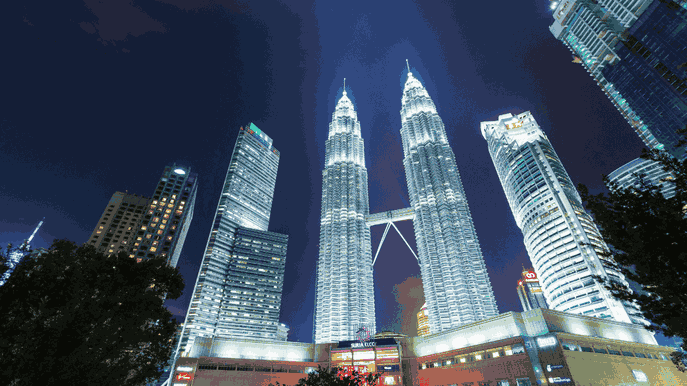
Many international students are exploring their options to find the perfect place to study, grow, and launch their careers.
Recently, Malaysia has emerged as one of the most attractive destinations for students worldwide.
Are you one of them?
Studying in Malaysia is an adventure that combines world-class academic standards with a high quality of life and a culture that feels like home from day one.
In fact, Malaysia expects to host 260,000 international students by 2030, with an impressive annual growth rate of 8.5%.
This guide is designed to give you everything you need to know about finding the perfect program so you can make one of the most important decisions of your life: choosing where to study.
8 Reasons to Study In Malaysia in 2026
- Get quality education: Malaysian universities are gaining international recognition and climbing global rankings thanks to the Malaysian Qualifications Framework ensuring global standards. Universiti Malaya has secured position #58 in the 2026 global rankings!
- Affordable tuition fees: Malaysia offers one of the lowest cost-to-quality ratios in the world – get Western-standard education at a fraction of the cost!
- High employability rate: Malaysian degrees are recognized globally, opening doors to international career opportunities. Over 79% of students participate in internships before graduation, and the new Graduate Pass allows you to work in Malaysia for 12 months after graduation!
- Gateway to Asia: be at the heart of Southeast Asia's booming economies! Malaysia's strategic location in the Strait of Malacca positions you at the literal heart of global commerce, where 25% of the world's traded goods pass through.
- Multicultural environment: Experience a harmonious blend of Malay, Chinese, and Indian cultures. Malaysia is ranked in the top three in Asia for English proficiency, with over 72% of the population capable of conversational English!
- English-medium programs: Study in English while learning about Asian culture and business practices, no need to learn a new language to start your studies.
- Broaden your network: Connect with classmates and professionals from over 140 countries in one of Asia's fastest-growing study destinations, projected to host 260,000 international students by 2030!
- Challenge yourself, grow, become a better version of you: Experience tropical living with access to over 120 destinations from KLIA through low-cost carriers, explore stunning islands, and immerse yourself in a harmonious multi-ethnic society.
Can You Study in Malaysia in English?
Yes! Most higher education institutions in Malaysia use English as the primary medium of instruction. This makes it an easy transition for international students. If you aren't a native speaker, you will typically need to show your proficiency through tests like IELTS (usually a score of 6.0+) or TOEFL.
Choose a Program
There are three ways most students choose where to study: By Subject, By Level, or By City.
Choose a Subject
Did you know you can study thousands of programs in Malaysia in English? Check out some of the most popular subjects:
- Business & Management – Learn why Malaysia is one of the best places to study business in Asia. With multinational companies establishing major operations in Malaysia and graduates starting at RM 3,000-4,500 monthly, you'll have access to world-class career opportunities. Universiti Utara Malaysia and Sunway University are leading institutions.
- Medicine (MBBS) – Discover the ultimate guide to study MBBS in Malaysia. International Medical University (IMU), Universiti Malaya, and Monash Malaysia offer WHO-recognized programs with robust clinical training. Admission typically requires AAA at A-Levels or IB score of 36 points, with starting salaries of RM 3,500-4,500.
- Engineering – Universiti Teknologi Malaysia (UTM) and Universiti Teknologi PETRONAS (UTP) are recognized globally for engineering output. Programs are integrated with the massive manufacturing sector in Penang (the "Silicon Valley of the East") and Johor. With Infineon's AUD$10 billion industrial hub, engineering graduates have excellent prospects with starting salaries of RM 3,500-5,000.
- Information Technology & Computer Science – Asia Pacific University (APU) has established itself as Malaysia's premier digital technology university. With the digital economy contributing 25% of GDP by 2025-2026, graduates in Data Science, Cybersecurity, and AI are entering a market with high demand and starting salaries ranging from RM 4,000-5,000.
- Hospitality & Tourism Management – Taylor's University is ranked #1 in Malaysia for Hospitality with industry-integrated programs. Study in one of Asia's top tourist destinations with hands-on industry experience.
- Islamic Finance & Banking – Malaysia is a global leader in Islamic finance education, attracting students from the Middle East and beyond. International Islamic University Malaysia (IIUM) and INCEIF offer comprehensive programs.
- Architecture & Built Environment – UTM and Taylor's offer programs learning from Malaysia's unique architectural landscape blending modern and traditional designs.
- Biotechnology & Life Sciences – Universiti Putra Malaysia (UPM) leads in agriculture and biotechnology with access to cutting-edge research facilities.
- Mass Communication & Media Studies – Thrive in Malaysia's vibrant multicultural media industry with programs focused on digital innovation.
Choose by Level
- Foundation Programs: 1 year preparatory programs.
- Diploma Programs: 2-3 year vocational and technical programs.
- Bachelor's Degrees: 3-4 years (4-5 years for Medicine and Architecture).
- Master's Degrees: 1-2 years by coursework or research.
- PhD Programs: 3-5 years research-based doctoral studies.
- Short Courses & Professional Certificates: Available in various fields
There are also dual-degree programs and twinning programs that allow you to study in Malaysia and complete part of your degree at partner universities in the UK, USA, Australia, or other countries!
Choose By City
Malaysia offers diverse study destinations, each with its own character and advantages:
- Kuala Lumpur (KL): The bustling political and financial capital with the most university options, internship opportunities in finance, technology, and media, and vibrant city life. Home to University of Malaya, Universiti Teknologi Malaysia (KL Campus), and many private universities. Read about living in Kuala Lumpur as a business student.
- Selangor: Surrounds Kuala Lumpur and hosts many top universities including Universiti Putra Malaysia, Universiti Kebangsaan Malaysia, and Management & Science University.
- Penang (George Town): Known as the "Pearl of the Orient," world-famous for its culinary scene and electronics manufacturing industry (the "Silicon Valley of the East"). Home to Universiti Sains Malaysia.
- Johor Bahru (JB): Southern Malaysia's economic hub at the gateway to Singapore, hosting Universiti Teknologi Malaysia's main campus.
- Kedah: Home to Universiti Utara Malaysia and soon to host Infineon's major industrial hub, creating excellent opportunities for engineering and business students.
- Malacca (Melaka): Historic UNESCO World Heritage city offering a peaceful academic retreat with one of the lowest costs of living.
- Cyberjaya: Malaysia's Silicon Valley, perfect for IT and technology students.
Costs of Studying in Malaysia
Malaysia offers one of the lowest cost-to-quality ratios in the world. Tuition fees are significantly lower compared to Western universities, and the cost of living is affordable compared to countries like Australia, the UK, or the US.
Estimated Tuition Fees by Level (2026)
Level of Study | Public University (Annual) | Private University (Annual) |
|---|---|---|
Foundation | RM 10,000 - 15,000 | RM 15,000 - 25,000 |
Bachelor's Degree | RM 11,000 - 25,000 | RM 18,000 - 45,000 |
Bachelor's (Medicine) | RM 35,000 - 60,000 | RM 100,000 - 165,000 |
Master's (Coursework) | RM 8,000 - 20,000 | RM 20,000 - 40,000 |
MBA Programs | - | RM 50,000 - 150,000 |
PhD | RM 5,000 - 15,000 | RM 15,000 - 30,000 |
Sample Monthly Living Budget (2026 Estimates)
Living expenses in Malaysia are significantly lower than in Western cities, yet they provide access to modern amenities and high-quality food.
Category | Frugal Student (RM) | Comfortable Student (RM) |
|---|---|---|
Accommodation | 400 - 700 (Shared) | 1,200 - 2,500 (Studio) |
Food & Groceries | 500 - 700 | 800 - 1,200 |
Utilities & Internet | 100 - 150 | 200 - 300 |
Transport | 50 - 100 (Pass) | 200 - 400 (Grab/Petrol) |
Personal/Social | 150 - 300 | 500 - 1,000 |
Total Monthly | RM 1,200 - 1,950 | RM 2,900 - 5,400 |
Kuala Lumpur is approximately 20-50% more expensive than smaller cities like Malacca or Ipoh, primarily due to higher rental costs. However, the increased availability of part-time work and professional internships in the capital often offsets these costs for career-minded students.
Accommodation Options and Costs
Type | Pros | Cons | Monthly Cost (RM) |
|---|---|---|---|
On-Campus Hostel | Convenient, Social, Cheap | Less Privacy, Strict Rules | 300 - 800 |
Shared Apartment | Social, Split Costs | Potential Roommate Conflicts | 500 - 1,200 |
Studio/Condo | Privacy, Amenities (Pool/Gym) | Most Expensive, Utilities Extra | 1,500 - 2,500 |
On-campus housing is generally cheaper and more convenient (no commute, included utilities), but may have restrictions (curfews, visitor policies) and less privacy. Limited availability means you should apply early.
Off-campus housing offers more independence and choice of location, but requires upfront deposits (usually 2-3 months' rent equivalent to RM 1,200-5,000), utility payments, and dealing with landlords. However, you get more space and lifestyle flexibility.
Can International Students Work While Studying?
Yes, but with restrictions. International students in Malaysia are permitted to work up to 20 hours per week during semester breaks and official holidays (more than 7 days), but NOT during regular semesters.
Work Regulations:
- Maximum 20 hours per week during semester breaks only
- International students are only permitted to work in specific sectors: restaurants, hotels, petrol stations, mini-markets
- Must get approval from Immigration Department
- Must be present with a university representative at the Immigration Department to register
- Must have valid student pass
- Cannot work in entertainment, gambling, or massage parlors
Scholarships in Malaysia 2026
Malaysia offers various competitive scholarship programs for international students aimed at attracting high-caliber researchers and international talent. Students typically need to be nominated or apply directly through scholarship portals or be sponsored by institutions such as Malaysian embassies.
Malaysian Government Scholarships
Malaysia International Scholarship (MIS) 2026
The MIS is the flagship scholarship program for postgraduate students from specific priority regions.
- Target: Master's and PhD candidates with a CGPA of 3.5 or higher
- Benefits: Full tuition fee coverage and a monthly stipend of RM 1,500
- Application Cycle: Typically opens in May/June for the following academic year
- Priority Areas: STEM, Economics, Environmental Studies, and Agriculture
- Apply through Malaysian missions in your country
Malaysian Technical Cooperation Programme (MTCP)
- For developing countries
- Covers tuition, living allowance, airfare
- Usually for short-term programs and master's degrees
University Scholarships
Most Malaysian universities offer their own scholarships for international students:
University of Malaya
- UM International Scholarship: 10-50% tuition waiver
- Sports and cultural achievement scholarships
- Research assistantships for postgraduate students
Universiti Putra Malaysia
- Graduate Research Assistantship
- Merit-based tuition discounts
Universiti Utara Malaysia
- International student scholarships
- Merit-based awards for high achievers
Private University Scholarships (Merit and Talent)
Private universities like Taylor's and Sunway offer significant tuition waivers (10% to 50%) based on academic performance, sports excellence, or creative talent.
Some universities also offer regional bursaries, such as the "ASEAN Scholarship" or "Early Bird" discounts for those who apply several months before the intake.
Full scholarships are rare and mostly competitive. Most scholarships cover partial tuition (10-50%). Plan to cover at least some costs yourself.
How To Apply to Malaysian Universities
- Choose your program and university.
- Prepare your documents.
- Submit your application.
- Wait for the offer letter.
- After receiving acceptance letter, start preparing for your student visa.
Read more: How to apply to universities in Malaysia as an international student
Student Life and Experiences In Malaysia
What is life like in Malaysia for international students?
The Climate: Malaysia's tropical climate averages 27°C to 32°C with high humidity year-round and frequent rain. The weather takes some adjustment if you're from a temperate climate, but most students adapt within a few weeks. Air conditioning is common in most buildings.
The People: Malaysian people are generally very welcoming and friendly to foreigners. The multicultural society means locals are accustomed to diversity. You'll find people speak multiple languages: Malay, English, Chinese dialects, and Tamil. Students should observe local values such as "respect for elders" which are deeply ingrained in the collectivistic Malaysian lifestyle.
EnglishProficiency: Malaysia is ranked in the top three in Asia for English proficiency, with over 72% of the population capable of conversational English. However, you may encounter "Manglish" (Malaysian English) in daily social interactions, which incorporates words from Malay, Chinese, and Tamil.
The Food: Malaysia is a food paradise! You'll experience authentic Malay, Chinese, Indian, and fusion cuisines. From nasi lemak and roti canai to dim sum and banana leaf rice, food is a major part of Malaysian culture. Penang is world-famous for its culinary scene. Halal food is widely available – Malaysia is a premier OIC (Organisation of Islamic Cooperation) education hub providing comprehensive halal-certified food options, prayer facilities, and a supportive social environment that adheres to Islamic values.
Safety: The Global Peace Index consistently ranks Malaysia as one of the safest nations in Southeast Asia. This stability is a critical factor for families when choosing a study destination. The nation's low crime rate and political resilience provide a secure foundation for international students. However, use common sense – avoid isolated areas at night, keep valuables secure, and be aware of petty theft in crowded areas.
Transportation: Major cities have excellent public transport including LRT, MRT, Monorail, and buses. The Touch 'n Go card works across most systems. Grab (ride-hailing) is popular and affordable. For inter-city travel, buses and domestic flights are available.
Student Communities: Most universities have active international student societies, cultural clubs, and sports teams. You'll find communities from your home country as well as opportunities to meet people from around the world. Many universities also have international staff – for example, Universiti Utara Malaysia has about 10% international staff from Singapore, Indonesia, and Europe as part of the government's policy to attract international scholars.
Culture in Malaysia
Malaysia's multicultural environment actually makes adjustment easier than many destinations. Success in Malaysia requires more than academic excellence; it necessitates cultural adaptation.
You'll experience:
- Religious diversity: Mosques, temples, churches coexist peacefully
- Language mix: Code-switching between languages is normal
- Fusion culture: Mixed traditions in food, celebrations, and daily life
- Asian values with modern lifestyle
- Cultural Pluralism: The Malaysian social fabric is a harmonious blend of Malay, Chinese, and Indian influences
Students should observe local values and dress modestly when visiting government offices or religious sites. Public expressions of emotion are often cautious. The collectivistic culture values "shyness" and "respect for elders."
Post-Study Work Opportunity in Malaysia
This revolutionary new initiative allows graduates to stay for 12 months post-graduation without needing an employer sponsor immediately. Malaysia has opened its Graduate Pass to 32 countries, including Australia, allowing graduates to work in Malaysia for one year after completing their degree, master's, or PhD.
This provision became effective in December 2023 and is gaining strong attention from stakeholders. This "bridge" is essential for students to find full-time roles that meet the salary requirements for a long-term Employment Pass (EP). With multinational companies like Infineon investing AUD$10 billion in Malaysia and the nation's 4.7% GDP growth projection, there are growing opportunities for international graduates.
Employment Pass (EP) Categories for Long-Term Work
Graduates who secure a high-value job can apply for an EP through the Expatriate Services Division (ESD).
Category | Monthly Salary Threshold (RM) | Duration |
|---|---|---|
Category I | 10,000+ | Up to 5 Years |
Category II | 5,000 - 9,999 | Up to 2 Years |
Category III | 3,000 - 4,999 | 12 Months (Restricted) |
Many students find it more valuable to focus on studies and seek scholarships rather than part-time work due to the restrictions, but the new Graduate Pass provides excellent post-graduation opportunities.
Is Studying in Malaysia Worth It?
This is one of the most common questions many students ask.
Malaysia offers one of the lowest cost-to-quality ratios in the world. You get internationally recognized degrees at a fraction of the cost of Western universities. A bachelor's degree in the UK might cost £60,000-£100,000, while in Malaysia you could complete the same degree for USD 20,000-45,000 total, savings of 30-60% compared to studying at home campuses in the UK or Australia through branch campuses.
The decision-making process for international students is increasingly driven by a desire for high ROI. With tuition fees at public universities highly subsidized even for international applicants, and living expenses estimated at RM 1,500-2,500 monthly, you can maintain a high standard of living on a modest budget.
Study in Malaysia
Join over 130,000 international students from 140+ countries who are already building their future in Malaysia!




Continue reading:
