


China and Malaysia are emerging as top MBA destinations for international students in Asia.
Both countries offer quality education, professional opportunities, and access to growing economies. But there are key differences between these two options that will shape which one you choose for your MBA.
Let's explore the differences and benefits of studying MBA in China vs Malaysia together.
China: Top-Ranked Business Schools
China comes in first place if you look at MBA rankings. CEIBS MBA program ranked #8 globally in the 2026 FT . Peking University hit #14.
CEIBS, Peking University Guanghua, Tsinghua, and Fudan are just a few of the top schools open to international students in China. Chinese MBA degrees are highly valued around the world, especially from a top university, and they offer students instant name recognition and strong career opportunities.
Read more: Top 10 Chinese Universities 2026
Malaysia: Lower Costs and Tuition
Malaysia is much better in terms of saving money. MBA tuition in Malaysia ranges from RM 25,000 to RM 120,000 ($5,800 to $28,000). University of Malaya charges RM 32,000 to RM 60,000 ($7,400 to $14,000) for international students. Taylor's University MBA is ranked #1 in Malaysia according to the 2026 QS Global MBA Rankings, ranking 131-140 globally and 20th in Asia with a 100% graduate employment rate.
China's MBA programs cost RMB 100,000 to RMB 488,000 ($14,000 to $68,000) for the full program. Top programs like CEIBS charge RMB 488,000 ($68,000) for their 16-month MBA. But China also offers scholarships for top students, high performers - such as university scholarships, female leaders etc.,
Cost of Living Comparison
Here is a comparison of the average monthly cost of living in major Chinese and Malaysian cities:
China | Cost of Living (USD) | Malaysia | Cost of Living (USD) |
Shanghai | $800-1,200 | Kuala Lumpur | $600-900 |
Beijing | $800-1,200 | George Town | $500-700 |
Shenzhen | $750-1,150 | Johor Bahru | $450-650 |
The costs of living vary depending mostly on your lifestyle. Living in the university is extremely affordable in both places. If you are looking to travel extensively and network, eat out in fancy restaurants, and enjoy shopping and more social activities and trips, costs will be much higher.
Malaysian tuition and living costs are generally cheaper - being roughly half what you'd pay in China for your MBA education.

China: Better Salary Outcomes After Graduation
China has stronger post-MBA salary data. According to the 2026 Financial Times ranking, Fudan University graduates saw a 173% average salary increase. (But bear in mind this is usually more for local Chinese students and not exclusively international students.)
CEIBS reported that 90.4% of MBA 2024 graduates accepted job offers within three months, with 85.9% securing jobs in Mainland China. Starting salaries for MBA graduates in China range from $30,000 to $70,000 depending on role and industry.
Malaysia's post-graduation earnings fall between RM 100,000 to RM 200,000 ($23,000 to $46,000) yearly. Entry-level salaries for international graduates start at $15,000 to $30,000 depending on industry.
Salaries give a benchmark, but your earning potential depends more on your own industry, proactivity, networking etc.,
Post-Graduation Work Process
China has reformed work visa rules for Master's graduates. If you graduate with 80%+ GPA from a "Double First-Class" Chinese university, you can apply for a Z Visa (work permit) immediately without the two-year work experience requirement.
Malaysia offers a Graduate Pass that lets you stay 12 months to search for work. However, it's limited to 32 specific nationalities. Americans, British, Australians, and New Zealanders can apply directly. Indian and Chinese applicants need additional approvals.
Read more: How to Apply to Universities in Malaysia as an International Student
China: Strongest University Diversity in Asia
China has many MBA programs across different cities, specializations, and formats, but the top ones tend to be in Beijing, Shanghai and Hong Kong. You'll find programs focused on technology management, healthcare administration, fintech, sustainable business, and traditional general management.

Top MBA Programs in China
Here are some of the top MBA programs in China.
China Europe International Business School (CEIBS)
CEIBS offers a full-time 16-month MBA program taught entirely in English. The school has been ranked Asia's #1 MBA for eight consecutive years in Financial Times rankings. The program connects you to multinational corporations and Chinese businesses across Asia.
Renmin University Business School (RMBS)
The International MBA at Renmin is a two-year program taught in English. Around 60% of international students receive financial aid. RMBS co-founded the Global Network for Advanced Management with Yale School of Management. Students can apply for dual degrees with Yale, National University of Singapore, and SUNY Buffalo.
Fudan University School of Management
Fudan partners with MIT Sloan to offer the International MBA. The program ranked #2 worldwide for salary percentage increase in 2024 and #1 in Asia for career services.
Peking University Guanghua School of Management
Guanghua offers an International MBA taught in English. The school ranks top in China for Fortune and Forbes MBA rankings. The program is known as the "Business School within a think-tank" for its research focus and policy connections.
Tsinghua University
Tsinghua offers an MBA in partnership with MIT Sloan. This dual-degree program gives you access to resources from both schools with faculty teaching from both institutions.
You can explore more on China Admissions
Top MBA Programs in Malaysia
Asia School of Business (ASB) in collaboration with MIT Sloan
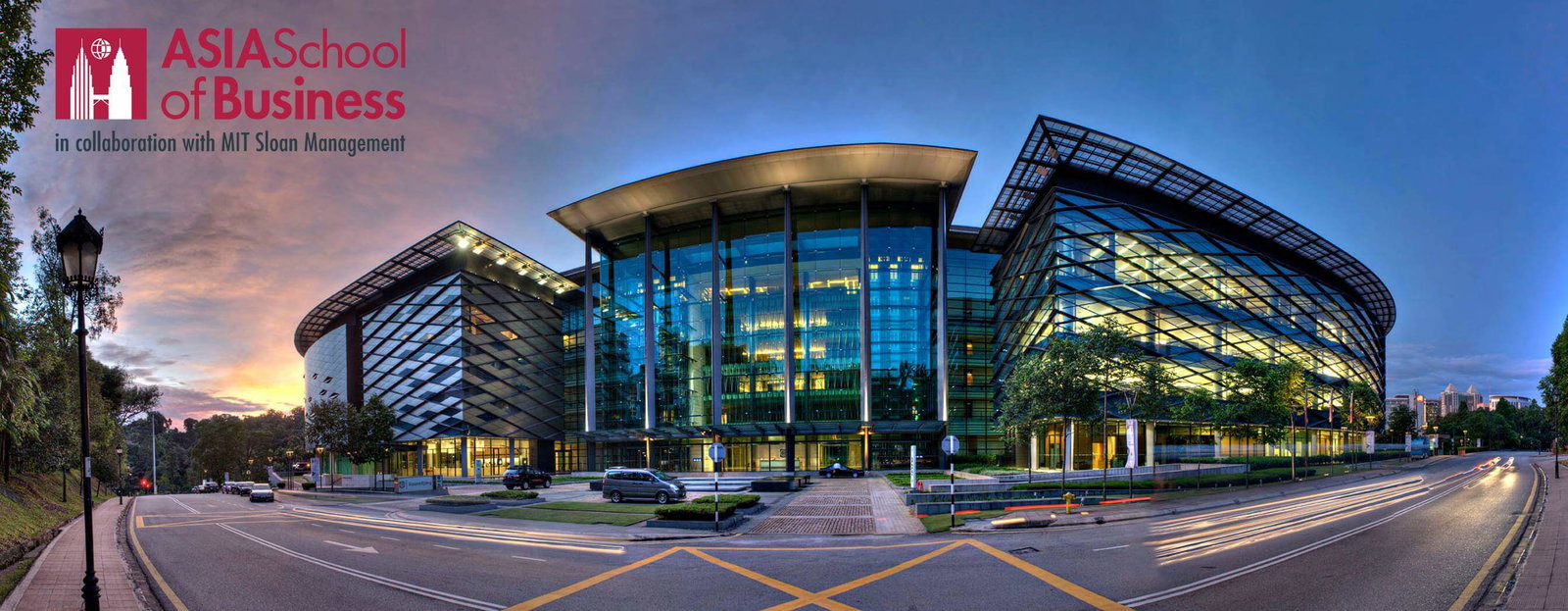
Asia School of Business provides a US-style academic framework based in Kuala Lumpur. The core of the program is its Action Learning model, where students step out of the classroom to complete required, semester-long consulting projects inside active companies across Southeast Asia. The curriculum also dictates a three-week term at the MIT campus in Cambridge, Massachusetts. This specific structure caters to students who want Western institutional credentials while physically building a localized professional network in the ASEAN market.
You can explore the ASB MBA program details to see if the curriculum matches your goals.
Taylor's University
Taylor's MBA is ranked #1 in Malaysia (QS 2026), 131-140 globally, and 20th in Asia. The program achieved 100% graduate employment rate and scored 98.5 out of 100 for entrepreneurship. Taylor's Business School holds AACSB accreditation, recognized by only 6% of business schools worldwide.
Universiti Malaya
UM is Malaysia's oldest and most prestigious public university. The MBA is accredited by AACSB and AMBA. You gain access to established alumni networks within Malaysian public and private sectors.
University of Nottingham Malaysia
Nottingham offers a British MBA in Southeast Asia. The degree certificate is identical to what UK campus students receive. The program holds EQUIS and AMBA accreditation and focuses on sustainable business practices.
Safety - Tie
Both countries are incredibly safe. But, you should be aware of standard safety issues. Pickpocketing occurs in crowded tourist areas. Students should maintain awareness and avoid walking alone late at night.
Career Opportunities in Business Hubs
China's economy is the world's second-largest. Shanghai, Beijing, and Shenzhen are major business hubs. Chinese tech giants like Alibaba, Tencent, and ByteDance have headquarters in these cities. Renewable energy, finance, and consulting sectors actively recruit MBA graduates.
About 86% of CEIBS MBA graduates stay in mainland China after graduation. The domestic market absorbs most graduates because opportunities exist at scale.

Malaysia's economy is smaller but growing faster. Kuala Lumpur serves as a regional Southeast Asian hub as SE Asia. Tourism, education, and digital sectors offer opportunities.
Traditional sectors in both countries tend to prefer local hires, and are often incentivised to hire locally unless there is something you can bring that is different (and worth paying more for) to the local labour market. Tech and digital roles are more accessible to international graduates.
Language and Daily Life
China: Chinese Language Required for Daily Life
Many Chinese MBA programs teach entirely in English. CEIBS, Peking University, Fudan, and Tsinghua all offer English-taught MBAs. You need TOEFL or IELTS scores.
Daily life in China uses Mandarin. But in the big cities and certain industries you can operate speaking English. Having Chinese is a big advantage, not just to understand the culture better.
Street signs, restaurant menus, and government services operate in Chinese. You'll need translation apps. Learning Chinese helps significantly with job prospects and adds points to work permit applications.
Internet access requires a VPN. Google, Facebook, and Western news sites are blocked without one.
Malaysia: English-Friendly Environment
Malaysia operates much more widely in English, especially in business settings. Bahasa Malaysia is official, but English functions well in cities like Kuala Lumpur. You can complete your MBA and handle daily life using English.
The Malay majority shares the country with large Chinese and Indian populations. English signage appears throughout cities. Climate is hot and humid year-round. Malaysians are generally friendly to foreigners. Mandarin can also be an advantage in certain industries but is not expected.
Scholarships and Financial Support
China Scholarship Opportunities
Chinese universities offer extensive scholarship programs. GMAT scores above 650 qualify for scholarships ranging from RMB 40,000 to full tuition. Scoring 750+ gets you 100% coverage at some schools.
The Chinese Government Scholarship covers full tuition, accommodation, and provides living stipends. Beijing Municipal Government Scholarship offers full or partial tuition. Universities provide merit-based scholarships without separate applications.
Malaysia Scholarship Options
Malaysia provides scholarships through universities and government programs. Public Bank and Yayasan Johor offer scholarships at Asia School of Business. Merit-based scholarships exist but are less widespread than China's offerings.
Which Should I Choose: China vs Malaysia?
Both countries have strong pros and cons. Each student has their own idea of what the best MBA environment looks like.
Choose China if:
- You want access to top-ranked business schools (top 30 globally)
- You're willing to learn Mandarin and adapt to cultural differences - to really get the most out of the experience.
- You want exposure to the world's second-largest economy and to understand it.
- Post-graduation work transition is important (easier for Master's graduates)
Choose Malaysia if:
- Lower tuition costs are your priority (generally half of China's costs)
- You prefer an English-operating environment
- Southeast Asian market exposure interests you
- You want easier cultural adjustment
- You're comfortable with smaller job market for lower cost
Students who are motivated, hardworking, and engaged will succeed in either location. The right choice depends on your career goals, budget, language comfort, and where you plan to work after graduation.
Browse MBA programs across Asia and find the one that matches your career goals and personal priorities.
Explore MBA Programs in Malaysia
Frequently Asked Questions
How much does an MBA cost in China vs Malaysia?
China MBAs range from $14,000 to $68,000 for the full program. Malaysia MBAs cost $5,800 to $28,000. Living costs are also lower in Malaysia at $280-$580 monthly compared to China's $300-$1,000 monthly.
Do I need to speak the local language?
China MBA programs teach in English but daily life requires Mandarin. Learning Chinese improves job prospects significantly. Malaysia operates widely in English for both education and daily life.
How long are MBA programs?
China programs run 12-24 months (typically 16-22 months at top schools). Malaysia programs run 1.5-3 years depending on full-time or part-time enrollment.
Which country is safer for international students?
Malaysia has stricter gun laws and lower violent crime rates. Both countries are generally safe with standard urban precautions needed.
What's the best choice for long-term career growth?
China offers higher salary growth, stronger rankings, and larger job markets. Malaysia offers easier transition, English environment, and regional opportunities. Your career goals and priorities determine the better choice.
