

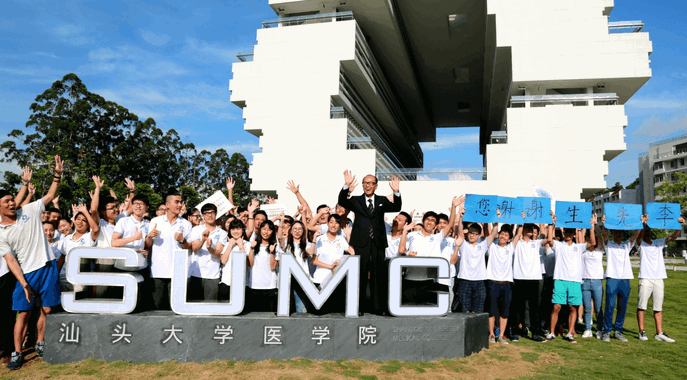
Shantou University Medical College (SUMC) ranks among China's top medical schools for international students. With English-taught MBBS programs, hands-on clinical training, and a 97-100% graduate employment rate, SUMC prepares students for medical careers worldwide.
Here's what makes SUMC different.
Shantou University Medical College (SUMC) stands as one of China's premier medical institutions with outstanding international recognition. Through its commitment to student-centered medical education combined with extensive biomedical and clinical research, SUMC offers one of the finest MBBS programs in China.
What sets SUMC apart is not just its reputation for teaching excellence, but its ability to nurture and develop the full potential of every MBBS student. The program at SUMC equips you with cutting-edge theoretical knowledge alongside comprehensive clinical training, preparing you for the evolving demands of modern healthcare.
Discover what makes SUMC the choice for aspiring medical professionals worldwide!
14 Reasons to Study MBBS at Shantou University Medical College
1. Strong exam performance record
SUMC demonstrates consistent excellence through measurable results. Year after year, SUMC students rank among the top performers out of more than 100 medical schools across China in the National Medical Licensure Examination.
SUMC students consistently achieve pass rates in the College English Test (CET) that exceed those of China's leading universities. Even more impressive, over the last six years, MBBS students in the English-medium program have maintained a remarkable 93% pass rate on the United States Medical Licensing Examination (USMLE) Step 1.
These results reflect the quality and rigor of SUMC's medical education program.
2. Curriculum designed for international practice
SUMC built its MBBS program with international students in mind. The MBBS program incorporates diverse learning opportunities including bilingual medical instruction, comprehensive foreign language training, overseas study programs, global internship placements, collaborative international research projects, faculty exchange initiatives, and participation in worldwide medical conferences.
SUMC pioneered an innovative curriculum model that caught the attention of China's Ministry of Education, which selected it as a benchmark for pedagogical reform nationwide. Universities across China now study and implement elements of SUMC's approach.
For 21 consecutive years, SUMC has achieved 100% enrollment of students who ranked it as their top choice.
3. Outstanding faculty
The teaching strength at SUMC includes more than 200 faculty and staff members. Professors make up approximately 60% of the academic team, while assistant professors and lecturers comprise the remaining 40%. Most faculty hold advanced degrees, with roughly 100 staff members possessing doctoral qualifications.
International experience enriches the faculty profile. About one-third of SUMC's academic staff gained educational or professional experience abroad. As part of its internationalization strategy, SUMC has substantially expanded its capacity to deliver medical courses in English. More than 30 international faculty members teach at SUMC, with that number growing each year.
4. Five affiliated hospitals for clinical training
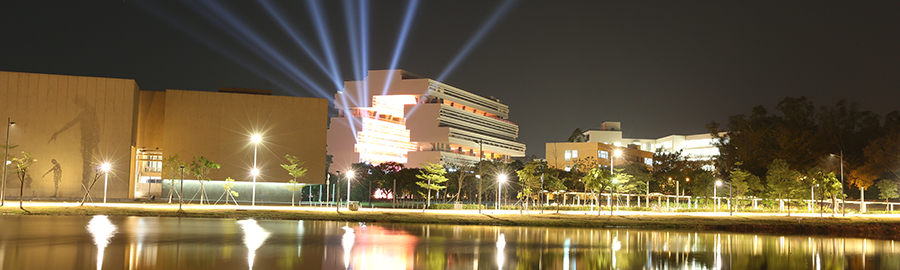
SUMC provides students with impressive modern infrastructure and advanced facilities. The campus features the widely acclaimed Medical Education Center, two expansive libraries, the Simulated Medical Center, the Human Life Science Hall, more than 50 athletic facilities, a recently completed sports and entertainment park, and a 200-room boutique hotel, among other amenities.
5. Modern training facilities
SUMC invested heavily in student facilities.
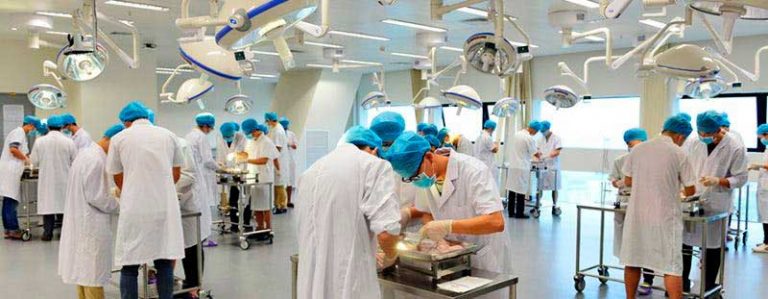
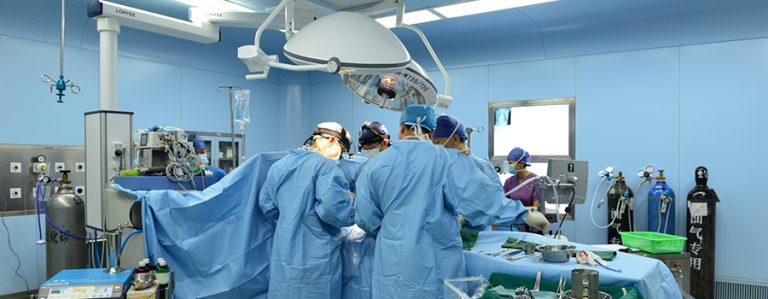
The Medical Education Center houses advanced simulation labs where you practice procedures on medical mannequins before working with patients. The Simulated Medical Center replicates operating rooms, ICUs, and emergency departments.
Two large libraries give you access to medical journals, textbooks, and research databases. The Human Life Science Hall includes anatomy labs with cadaver dissection facilities.
6. Active research environment
SUMC operates several key research centers and laboratories across southern China. Faculty members publish in international journals and present at global conferences. Students can join research teams working on projects in areas like cancer biology, infectious diseases, neuroscience, and public health. Research training forms a core part of the MBBS curriculum.
7. Digital Learning Resources
Students at SUMC benefit from comprehensive digital learning platforms. SUMC built over 30 themed websites for teaching and self-study.
The Clinical Skills Center web portal provides video demonstrations, practice cases, and assessment tools. Students can access online USMLE practice tests, interactive English learning modules, and a digital microscopy system.
Students use online platforms to view grades, evaluate courses, and complete self-study tests.
8. High employment rates
97-100% of SUMC graduates find employment within their first year after graduation.
SUMC has topped employment rankings in Guangdong province every year since the provincial government began publishing these figures in 2001.
Graduates work in hospitals across China, pursue residency training abroad, or continue into specialty programs. Some enter public health, research, or medical education roles.
The school maintains strong relationships with hospitals and healthcare organizations.
9. International exchange programs
SUMC partners with medical schools and hospitals worldwide.
Students can apply for short-term study programs, clinical rotations, or research internships abroad. Partner institutions include universities in the US, UK, Australia, and across Asia.
Since 2009, SUMC has offered bi-annual training programs in traditional Chinese medicine. Some exchanges receive funding through Chinese government scholarships.
10. Hands-on teaching methods
SUMC replaced traditional lecture-heavy education with active learning.
Students work through interactive case studies, participate in group debates, join journal clubs, and present research findings. Problem-based learning sessions require you to diagnose and develop treatment plans for realistic patient scenarios.
Classes stay small enough for direct interaction with professors. Faculty members know students by name and provide individual feedback.
11. Diverse student community
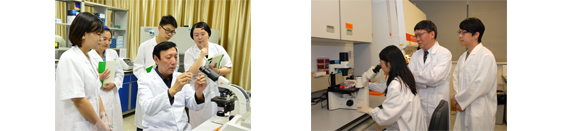
SUMC enrolls one of the highest percentages of international students among medical schools in China.
Students study alongside classmates from across Asia, Africa, Europe, and the Americas. The diverse student community creates opportunities to understand different healthcare systems and cultural approaches to medicine.
Local Chinese students and international students take some classes together. You'll build cross-cultural communication skills that matter when treating diverse patient populations.
Student organizations host cultural events, sports competitions, and social activities throughout the year.
12. Community health service
Community health service represents a cornerstone of the SUMC mission. Through its partnership with the Li Ka Shing Foundation, SUMC has established and sustained meaningful community health programs.
Each year, thousands of SUMC students, healthcare professionals, and faculty members contribute to charitable health initiatives established by the foundation. These volunteers deliver medical care to underserved populations, provide pain management services, offer nursing support, and extend psychological counseling to those in need.
13. Beautiful location
SUMC calls Shantou home, a coastal city in Guangdong province. With a population of approximately 5 million, Shantou offers a more manageable urban environment compared to megacities like Beijing and Shanghai, while maintaining modern infrastructure and preserving its rich historical and cultural heritage.
Designated as one of China's original five Special Economic Zones, Shantou functions as a vital port city, economic hub, and center of knowledge in eastern Guangdong. The city attracts residents and visitors with its comfortable subtropical climate, scenic mountains, beautiful islands and coastline, exceptional seafood cuisine, and distinctive local culture.
14. Student support services
SUMC has transformed medical education by moving away from traditional teacher-centered instruction toward a student-centered learning model. This approach emphasizes lifelong learning principles while focusing on practical skill development and professional attitude formation.
Students engage deeply through interactive projects, collaborative case analysis, group debates, literature discussions, journal club participation, and structured self-directed study. This active learning environment accelerates the development of essential professional competencies and clinical skills.
Study MBBS in China
You can browse and start applying to MBBS programs in China at Global Admissions! You can also book a call with us to help you find which program fits your background!
Frequently asked questions
Is SUMC's MBBS degree recognized internationally?
Yes, Shantou University Medical College appears in the World Directory of Medical Schools (WDOMS), which is maintained by the World Federation for Medical Education. This listing enables SUMC graduates to sit for medical licensing examinations in most countries around the world
What are the tuition fees and living costs for international students at SUMC?
International students in SUMC's English-taught MBBS program pay approximately 50,000 to 60,000 RMB per year in tuition (roughly $7,000 to $8,500 USD).
Can I practice medicine in my home country after graduating from SUMC?
Yes, SUMC graduates can pursue medical practice in their home countries after completing the specific licensing requirements of that country. Each nation maintains its own medical licensing process that all physicians must satisfy.
What language are classes taught in, and do I need to learn Chinese?
SUMC delivers its MBBS program for international students entirely in English. All fundamental medical courses, including anatomy, physiology, pathology, pharmacology, and clinical subjects, use English as the medium of instruction. Course materials, textbooks, and examinations are all provided in English, and faculty members who teach international students possess strong English communication skills. However, you must learn basic Mandarin for daily life and for your final-year clinical rotations in Chinese hospitals.
