

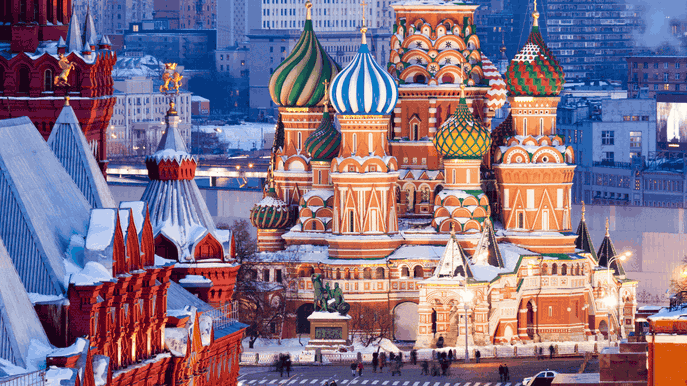
Russia is often overlooked, yet it remains as one of the popular study destinations in the world. Over 400,000 international students currently choose to build their futures there. While many countries are raising tuition fees and tightening visa rules in 2026, Russia is making education more accessible.
The government recently expanded its "Open Doors" scholarship program to offer 30,000 fully funded spots for international applicants. Even more helpful is a new policy for graduates: if you finish a degree at a top university, you now have a clearer path to stay and work without the usual visa hurdles.
For students seeking advanced training in medicine or engineering without high student debt, this is an option worth exploring.
Why Russia?
Russia offers a specific type of value for international students, particularly those interested in science, technology, and global trade. The country is positioning itself as an educational bridge to the "Global South," including Asia, Africa, and Latin America. This means students here gain a perspective that is different from Western institutions. You learn how to navigate markets and industries that are growing quickly outside of Europe and North America. This is a practical choice for future engineers, doctors, and diplomats who want to work in these expanding regions.
The educational system focuses heavily on deep technical skills. Russian universities are famous for their strong curriculum in mathematics, physics, and computer science. The government subsidizes education, which keeps tuition fees much lower than in other countries with similar facilities. Students often have direct access to research labs and advanced equipment early in their studies.
Daily life in major Russian cities is modern and highly digital. Students find that public transport is reliable and that banking and services are easily managed through smartphone apps.
Safety is also a priority in university towns, with well-lit streets and secure campuses. Beyond the classroom, learning the Russian language is a significant asset. It is a primary language for business across Central Asia and Eastern Europe. This skill allows graduates to communicate directly with millions of people and opens doors to careers in international corporations that operate in this vast area.
- Affordable Tuition: Most degrees cost between $2,000 and $5,000 USD per year.
- Government Support: There are 30,000 full scholarships available annually for international applicants.
- Specialized Focus: Universities like ITMO and MIPT rank highly worldwide for programming and physical sciences.
Best Cities to Study in Russia
Moscow
Moscow is Russia's academic capital and home to its most internationally recognized universities. It is a massive, fast-moving city where Soviet-era architecture sits next to modern skyscrapers and underground malls. The metro system is one of the most efficient in the world, and student life is vibrant. Costs are higher than in other Russian cities, but still low by global standards.
Top Universities in Moscow: Lomonosov Moscow State University (QS #76), Moscow Institute of Physics and Technology (MIPT), RUDN University (QS #316), Higher School of Economics (HSE), NUST MISIS
Saint Petersburg
Saint Petersburg is Russia's cultural heartland. Founded in 1724, it has produced 9 Nobel Prize winners and is home to the Hermitage Museum, one of the largest art collections in the world. The city has a more European feel than Moscow, and international students often find it easier to navigate as an outsider. Saint Petersburg State University ranks #240 globally (QS 2025).
Top Universities in Saint Petersburg: Saint Petersburg State University, Saint Petersburg Polytechnic University (SPbPU), ITMO University
Tomsk
If you are looking for an academic city without the price tag of Moscow or Saint Petersburg, Tomsk is one of Russia's best-kept secrets. It has the highest concentration of students per capita of any Russian city. Tomsk State University (TSU) is the largest classical university in Russia's Asian region, home to more than 3,000 students from 70 countries, and ranks #431 globally.
Top Universities in Tomsk: Tomsk State University, Tomsk Polytechnic University, Siberian State Medical University
Kazan
Kazan is the capital of Tatarstan and one of Russia's most multicultural cities, blending Russian and Tatar cultures. It is a major center for oil and gas engineering, IT, and medicine. Tuition and living costs are lower here than in Moscow, making it a smart value pick.
Top Universities in Kazan: Kazan Federal University, Kazan National Research Technical University
Application Dates and Schedule
Russian universities primarily run on a single-semester Fall intake system, though some universities offer a Spring intake as well.
Fall Intake (Main Intake)
- Semester runs from September to January
- Application deadline: April to June
Spring Intake (Limited Programs)
- Semester runs from February to June
- Application deadline: September to November
Russian Government Quota Deadlines (Annual Scholarships)
- By December 15 for CIS countries; by January 15 for all other countries.
Apply early. Processing times for invitations, visa applications, and HIV tests (yes, this is required) can stretch to 6-8 weeks.
Tuition Fees at a Glance
Degree Level | Annual Tuition Range (USD) |
Bachelor's Degree | $1,500 - $4,500 |
Specialist Degree | $1,500 - $4,500 |
Master's Degree | $3,700 - $8,100 |
PhD / Postgraduate | $1,300 - $4,500 |
Medicine (MBBS) | $3,500 - $7,000 |
Moscow State University offers programs with annual fees between $5,000 and $10,000. Saint Petersburg State University charges between $4,500 and $8,500 per year. These are the premium end of the market. Most students will pay closer to $2,000-$4,000 annually.
Cost of Living in Russia
Budget students can live for under $200 per month; a shared apartment and moderate lifestyle will cost $400-$500 per month. Moscow and Saint Petersburg are the most expensive cities but are still affordable by international standards.
Expense | Monthly Cost (USD) |
University Dormitory | $20 - $80 |
Private/Shared Apartment | $200 - $450 |
Food (self-catering) | $80 - $150 |
Transportation | $15 - $30 |
Health Insurance (required) | $5 - $10 |
Total (budget) | $180 - $300 |
Total (comfortable) | $350 - $650 |
One important note: due to international sanctions, some Western payment apps and international bank cards do not function in Russia. You will need to plan your finances carefully and ask your university's international office about the best money transfer solutions available to students from your country.
Scholarships for International Students
Russian Government Quota
This is the most significant funding opportunity available. The Russian Ministry of Education offers comprehensive scholarships covering 100% of tuition fees, monthly stipends, and accommodation costs. Over 15,000 scholarship positions are available annually for students from 180+ countries.
- Covers: Full tuition, dormitory placement, monthly stipend, and Russian language preparatory courses if needed
- Does not cover: Flights, personal expenses, health insurance
- Apply through: Rossotrudnichestvo (Russian Centers for Science and Culture) in your home country, or through the Russian embassy
Open Doors: Russian Scholarship Project
The scholarship covers tuition fees and provides a monthly stipend. It is run by the Russian Association of Global Universities and is open to students from any country applying for Master's or PhD programs in fields including mathematics, physics, computer science, economics, biotechnology, and AI.
Apply at: od.globaluni.ru
University-Specific Scholarships
The Higher School of Economics (HSE) offers several scholarships covering 25 to 100 percent of tuition fees for outstanding international students at all study levels. NUST MISIS offers stipends for international students starting English-medium MSc STEM programs. Saint Petersburg Polytechnic University offers scholarships covering one semester of tuition or dormitory costs for selected Master's programs.
Language Requirements
Studying in English
Many Russian universities now offer English-taught programs, particularly at the Master's level. You will typically need a minimum IELTS score of 6.0 or TOEFL iBT of 79 for most programs. Check your target university's specific requirements, as they vary.
Studying in Russian
If you plan to study in Russian, you will need to demonstrate Russian language proficiency. Most universities offer a one-year paid preparatory (Russian language) program that you can complete before starting your degree. Government Quota holders can get this preparatory year covered as part of their scholarship.
Application Documents Required
Bachelor's Applications
- Valid passport and passport photo
- Secondary school leaving certificate / diploma
- Academic transcripts
- English or Russian language proficiency certificate
- Personal statement / motivation letter
- Bank statement showing financial capacity
- HIV test certificate (taken within the last 3 months)
- Completed application form
Master's Applications All of the above, plus:
- Bachelor's degree diploma
- Bachelor's transcripts
- CV / resume
- Research proposal or statement of purpose (for research programs)
PhD Applications All of the above, plus:
- Master's degree diploma and transcripts
- Master's thesis
- Research proposal
- Letter from a confirmed research supervisor
The Student Visa: Step by Step
Student visas in Russia are required for students from most foreign countries. Russia is not a member of the EU or EFTA, so EU students need a visa. Exceptions apply for CIS countries including Armenia, Azerbaijan, Belarus, Kazakhstan, Kyrgyzstan, Ukraine, Moldova, Tajikistan, and Uzbekistan.
- Step 1: Get accepted to a Russian university. Your university issues an official invitation letter.
- Step 2: Get your HIV test done at a certified clinic. The HIV certificate must be taken within the last three months and should still be valid for 15-30 days on the day of your visa application.
- Step 3: Apply at your nearest Russian embassy or consulate. Processing time can take 2 to 6 weeks.
- Step 4: Your initial visa is valid for 90 days (single-entry). After you arrive, your university will help you convert this to a multi-entry annual visa.
- Step 5: Register your arrival in Russia at the local GUVM office within seven days of arrival. Failing to do so can result in a fine, or at times, expulsion. Your university's international office typically handles this for you.
Visa Documents Checklist:
- Completed visa application form (visa.kdmid.ru)
- Valid passport (at least 18 months validity remaining, 2 blank pages)
- One passport photo
- University invitation letter
- Negative HIV test certificate
- Health insurance with at least 30,000 EUR coverage valid in Russia
- Money order / visa fee payment
Can International Students Work in Russia While Studying?
Students can work up to 20 hours per week during the academic term and full-time during holidays. You need a separate work permit from the Federal Migration Service.
The permit costs RUB 3,500 (around USD 63), is valid for one year, and generally takes 10 days to acquire. You can only work in your city and in the profession specified on your permit.
If you drop out of your program, your work permit is cancelled automatically. Students from Armenia, Belarus, Kazakhstan, and Kyrgyzstan (Eurasian Economic Union members) do not need a separate work permit at all.
Post-Study Work
This is where most study-in-Russia guides go silent, so pay attention. Russia does not have a dedicated post-study work visa route. After you graduate, your student visa expires and you must apply for a separate work visa, which requires a job offer from a Russian employer first. International students who wish to work after graduation must obtain a work visa or residence permit. Without this, they will not be able to stay or work in Russia.
There is one notable exception: since August 2020, foreign graduates who earn an honors degree (known as a "red diploma" in Russia) can apply for a temporary residency permit, which is the first step toward permanent residency.
For most international students, especially those from Asia, Africa, or the Middle East, the post-graduation strategy is to use their Russian degree and any Russian work experience to build a career either in Russia or to return to their home country where the degree holds strong recognition. Russian STEM, medicine, and engineering degrees carry significant weight across Asia, Africa, and BRICS nations.
Looking Ahead
Russia is a genuinely excellent choice for students who are price-conscious, academically serious, and studying STEM, medicine, engineering, or natural sciences. The cost-to-quality ratio at universities like Moscow State University, MIPT, ITMO, and HSE is hard to beat globally. The government scholarship program is one of the most generous in the world, and competition is lower than for comparable programs in Germany or South Korea.
However, study in Russia in 2026 comes with real trade-offs that you need to weigh honestly. The ongoing conflict in Ukraine has resulted in international financial sanctions that complicate banking and money transfers for students. Some Western employers and universities may view a Russian degree with additional scrutiny, though this concern applies much less in Asia, Africa, the Middle East, and Latin America, where Russian degrees remain highly respected.
There is also no post-study work visa of the kind you would find in Canada or Germany. Our recommendation: if you are from South or Southeast Asia, Africa, Latin America, or the Middle East, and your goal is a quality STEM or medical degree at a fraction of Western costs, Russia remains a top-tier option worth serious consideration. Apply for the Government Quota first. If you are from Europe or North America and planning to build your career back home after graduation, the practical complications and degree recognition questions make other destinations a safer long-term investment.
Do your research, talk to current students at your target university, and plan your banking situation before you land. Russia rewards prepared students generously.
